

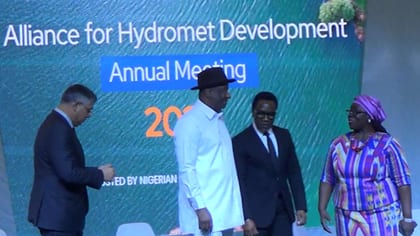
World Meteorological Organization (WMO), Nigerian Meteorological Agency (NiMet) and climate experts don call for more investment to monitor weather, predict weather conditions and give early warning before disaster happen. Dem warn say disasters wey dey happen because of climate change dey threaten Nigeria security, food production, public health and economic development more and more.
Dem make the call during the 2026 annual meeting of the Alliance for Hydromet Development, wey NiMet host for Lagos. The theme of the meeting na “Partnership, Innovation and Sustainable Investment in Weather, Water and Climate Services.”
The meeting bring government officials, weather and water agencies, climate finance institutions, researchers, development partners and private-sector representatives together. Some of the participants come from Chad, Niger and United Arab Emirates.
Dem discuss how to use weather and climate information take make better decisions wey go protect lives, people livelihood and important infrastructure.
WMO President, Dr. Abdulla Ahmed Al Mandous, talk say to close the gaps wey dey weather and climate services around the world go need everybody to work together, steady funding and stronger partnerships.
He stress say correct information about weather, water and climate na important national infrastructure because agriculture, energy, transport, health and water management depend on accurate weather predictions and early warnings.
Al Mandous talk say the Alliance, wey dem launch for the 2019 United Nations climate conference for Madrid, dey work to close the gaps for weather and climate services before 2030.
He urge governments to strengthen their weather and water agencies, improve how dem dey operate, increase cooperation between regions and bring more investment.
He also talk about how Nigeria dey contribute more to cooperation across the region, including helping other African countries build their capacity for weather forecasting.
According to wetin dem talk for the meeting, investment for Nigeria weather and climate services under ECOWAS-related programmes don get estimated economic returns of ₦1 invested to ₦19 in returns.
NiMet Director-General, Prof. Charles Anosike, talk say Nigeria need to go beyond collecting weather data. According to am, the information must help people make decisions at every level, from government planning to farming and how communities prepare for disasters.
Anosike explain say Nigeria big landmass and the small number of weather observation facilities make am difficult to cover everywhere properly, especially rural areas, farming communities and remote border areas.
He call for more investment in weather stations, radar systems, remote sensing technology and digital platforms to improve weather predictions and help more people get correct information.
He say NiMet dey provide seasonal climate predictions, daily weather forecasts, advice for farmers, flood-risk information, sea and maritime forecasts, and alerts about dangerous weather conditions. All these dey help aviation, agriculture, shipping and disaster management.
Anosike also highlight partnerships with government agencies, research institutions, development organisations and private businesses to turn weather predictions into practical advice wey people fit use.
Some of these efforts include exploring artificial intelligence and digital advisory systems to help farmers, as well as weather-based insurance wey go help agricultural businesses manage risks wey climate change fit cause.
“Weather prediction no be early warning until e reach the people wey dey at risk, in a way wey dem fit understand, and importantly, early enough,” Anosike talk.
Daniel Kull, WMO Director of Development Partnerships and Programme Delivery, say international cooperation dey important to improve weather forecasting and close gaps for weather observation.
“No country fit predict weather alone,” Kull talk, as e stress say countries and development partners need to share knowledge, skills and resources.
He also stress say governments must treat weather services as important national infrastructure and provide steady funding for equipment, daily operations and skilled workers.
The meeting highlight how satellite observation, computer-based weather prediction, artificial intelligence and data analysis fit help make weather information more accurate and easier for people to access.
Participants also discuss how to make sure say new technology go produce warnings wey people fit understand and act on.
Ndidi Okonkwo Nwuneli, co-founder and chair of Sahel Consulting, talk say climate information get strong connection with food security, public health and how households dey live.
She explain say changes in rainfall, flooding and extreme heat fit disrupt farming, increase financial pressure and cause health problems.
Nwuneli call for stronger connection between climate services, agriculture, health, insurance and financial institutions. She argue say weather information must guide decisions about infrastructure, production and investment.
“The data na the foundation. Cooperation and important partnerships na wetin we need,” she talk, as she urge governments, development partners and businesses to work together to make communities better prepared for climate-related problems.
Nwuneli also raise concern about how Africa no get enough access to global climate funding. She call for more investment to help the continent prepare for and manage climate risks.
She say climate information no go bring enough benefit unless institutions and businesses use am to make informed decisions and protect their investments.
As representative of Lagos State Governor, Special Adviser on Blue Economy, Oluwa-Damilola Emmanuel, talk say flooding and extreme weather dey pose serious danger to lives, infrastructure and economic activities, especially for coastal cities like Lagos.
Emmanuel point to the 2022 flood for Nigeria, wey displace more than 2.4 million people, kill over 700 people and cause damage wey dem estimate at $1.84 billion.
He say correct weather predictions and effective early-warning systems fit help communities prepare for disasters and reduce losses.
He urge government agencies, emergency responders, researchers, weather services and private investors to work together more closely.
He also call for investment not only in weather stations and forecasting technology, but also in maintenance, technical skills and the ability to keep the systems running for a long time.
“Our partnership must lead to action, our innovations must solve real problems, and our investments must bring lasting benefits to the public,” Emmanuel talk.
According to the meeting notes, Minister of Aviation and Aerospace Development, Festus Keyamo, also assure participants say Federal Government dey committed to supporting continued development of the meteorological sector.
Wetin e talk show the importance of weather services to aviation safety and why government support must continue.
The meeting also get representatives from the Office of the President on disaster affairs and other government institutions. This show how weather forecasting connect with emergency preparation and national development.
Participants stress say early-warning systems fit only work well when warnings reach communities wey dey at risk on time, and when dem get practical plans to respond.
Dem call for better cooperation between weather agencies, emergency services, policymakers and local communities so that weather predictions go lead to early action.
The Alliance for Hydromet Development bring development, humanitarian and climate finance institutions together to help countries strengthen their weather, water and climate services.
The Alliance dey assess the gaps wey countries get in their capacity and support investment in basic weather and climate observation systems.
As the 2030 target dey come closer, the meeting call on governments and partners to turn their assessments into projects wey get funding, improve weather forecasting across countries and strengthen cooperation across borders and different economic sectors.
The main message from the Lagos meeting na say Nigeria and other countries must treat weather services as an important part of national security and economic planning. Steady investment and stronger partnerships dey necessary to turn weather data into timely action wey go save lives and protect people's means of livelihood.

Comments
Add a comment